Most software is engineered for a world that behaves.
It assumes stable internet and stable identity. It assumes the user has time and safety. It assumes the institutions around the user are aligned with their interests.
Protective computing assumes the opposite.
It treats instability as the default operating condition. It treats coercion risk as a design input. It treats the browser as a contested surface. It treats central infrastructure as an optional convenience rather than a dependency.
The baseline claim
A protective system must remain usable when the environment turns hostile.
Hostile can mean low battery and low bandwidth. Hostile can mean an abusive partner with access to the device. Hostile can mean an employer or insurer demanding records. Hostile can mean network denial and content blocking. Hostile can mean a compromised browser extension.
If a system fails closed under pressure, it is not protective.
Degraded first is architecture
Degraded first is not a styling preference. It is architecture that survives loss.
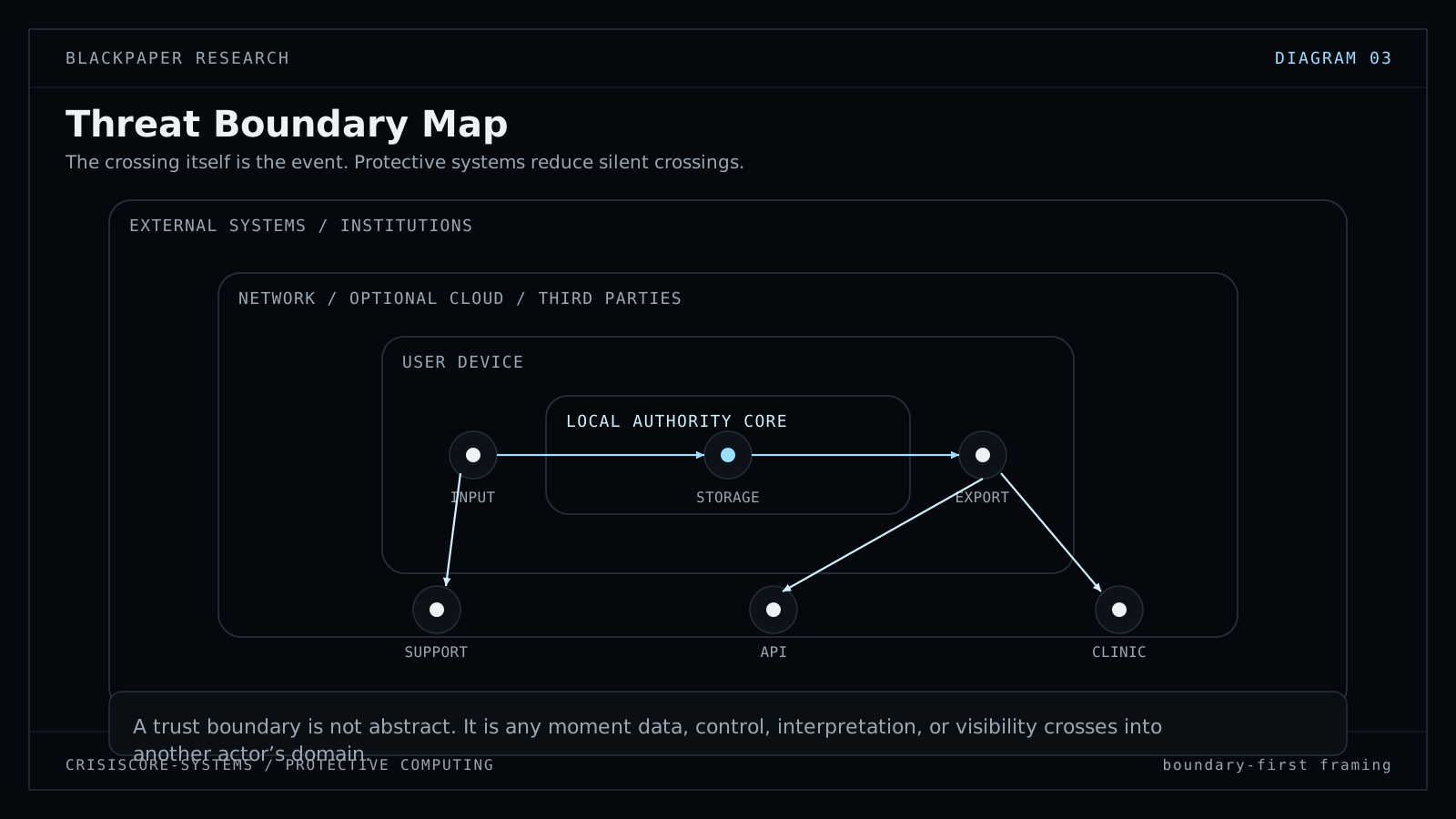
Threat boundaries have to be explicit under hostile conditions: what is protected, what is assumed, and where those assumptions stop.
A degraded first system
It defaults to local authority The user can read and act without a server round trip The user can preserve progress when the session is interrupted
It tolerates partial observability Logs and proofs are designed for what you can actually capture
It has safe failure modes A failure state is informative and reversible A failure does not erase user work
It maintains navigability without scripts A script blocker should reduce polish, not remove the ability to navigate
You can treat this as a simple test. If JavaScript is disabled and the site becomes a dead end, you have engineered a failure condition.
Local authority is the trust boundary
Protective systems invert the usual control structure.
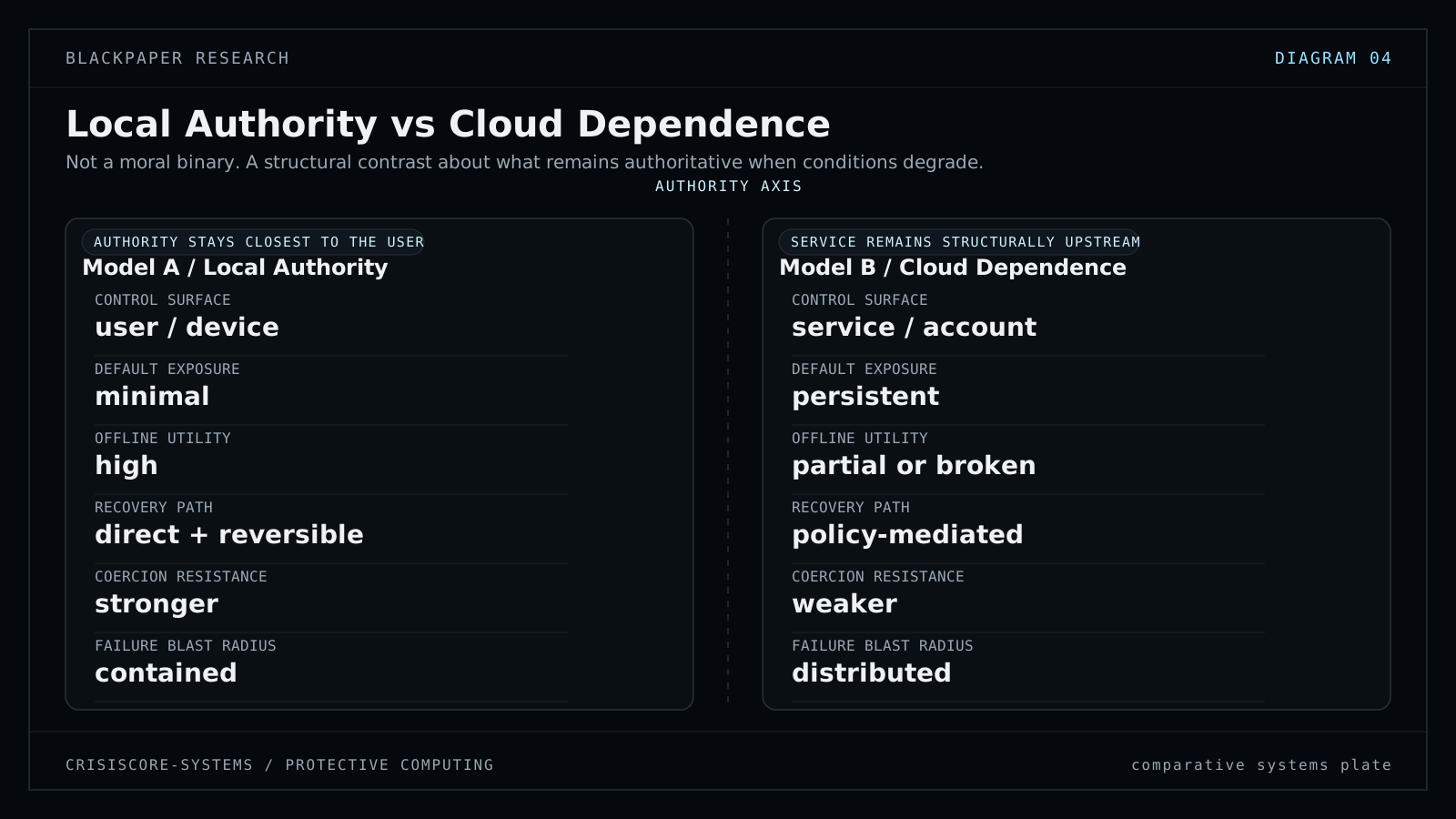
This is the core inversion: a protective system keeps the user and device as the primary authority, with cloud infrastructure treated as optional convenience rather than mandatory control point.
In conventional apps the server is the authority. The user is a terminal. The export is an afterthought.
In protective computing the user is the authority. The device holds the primary state. The export is explicit. Sharing is a user action, not a background process.
This is why the cloud is optional. Sync can exist. Accounts can exist. But the core system cannot depend on them to function.
Proof beats narrative
Protective computing favors verifiable artifacts.
That can be a DOI backed canon. That can be a repository history. That can be a reproducible build. That can be a dossier with testable constraints.
Narratives are easy to produce. Proof is expensive and therefore meaningful.
This portfolio is treated as an artifact.
Its content is schema validated. Its links are checked. Its core routes are smoke tested. Its mobile navigation and projects browsing are functional without scripts.
That is not a claim. That is an implementation detail you can inspect.
The doctrine in one page
Protective computing is the discipline of building systems for human vulnerability.
Design for instability. Make the user the authority. Prefer reversible actions. Build for inspection. Make failure safe. Make truth checkable.
If you want a concrete starting point, read the dossiers under Projects and the canon under Proof.
Links
The projects dossier index is at /projects. The reading room is at /writing. The canon and proof surfaces are at /proof.