Protective Computing for Post-MVP Teams
Defensible Trust Architecture for Sensitive-Data Products
Two-week Trust Hardening Review that cuts dangerous data collection, makes boundaries explicit, and leaves you with a roadmap your team can ship.
For post-MVP teams building tools for clinicians, advocates, operators, and people under coercive pressure.
If your product handles harm-prone data, the question is no longer whether the MVP works. The question is whether the system stays usable, bounded, and defensible when power, trust, connectivity, or operator confidence start to fail.
I help teams reduce dangerous data collection, harden critical flows, and leave with a roadmap a product team can actually act on.
A two-week front-door review for post-MVP teams building sensitive-data products.
Front door
Trust Hardening Review
Fixed-scope diagnostic for teams that need fast clarity before a larger hardening push.
What you leave with
Defensibility Packet
Boundary statement, data inventory and purpose map, collection defaults audit, retention and deletion plan, and a now/next/later roadmap.
Best fit
Decision-ready teams
You already have users or an imminent launch, plus the authority and budget to act on findings.
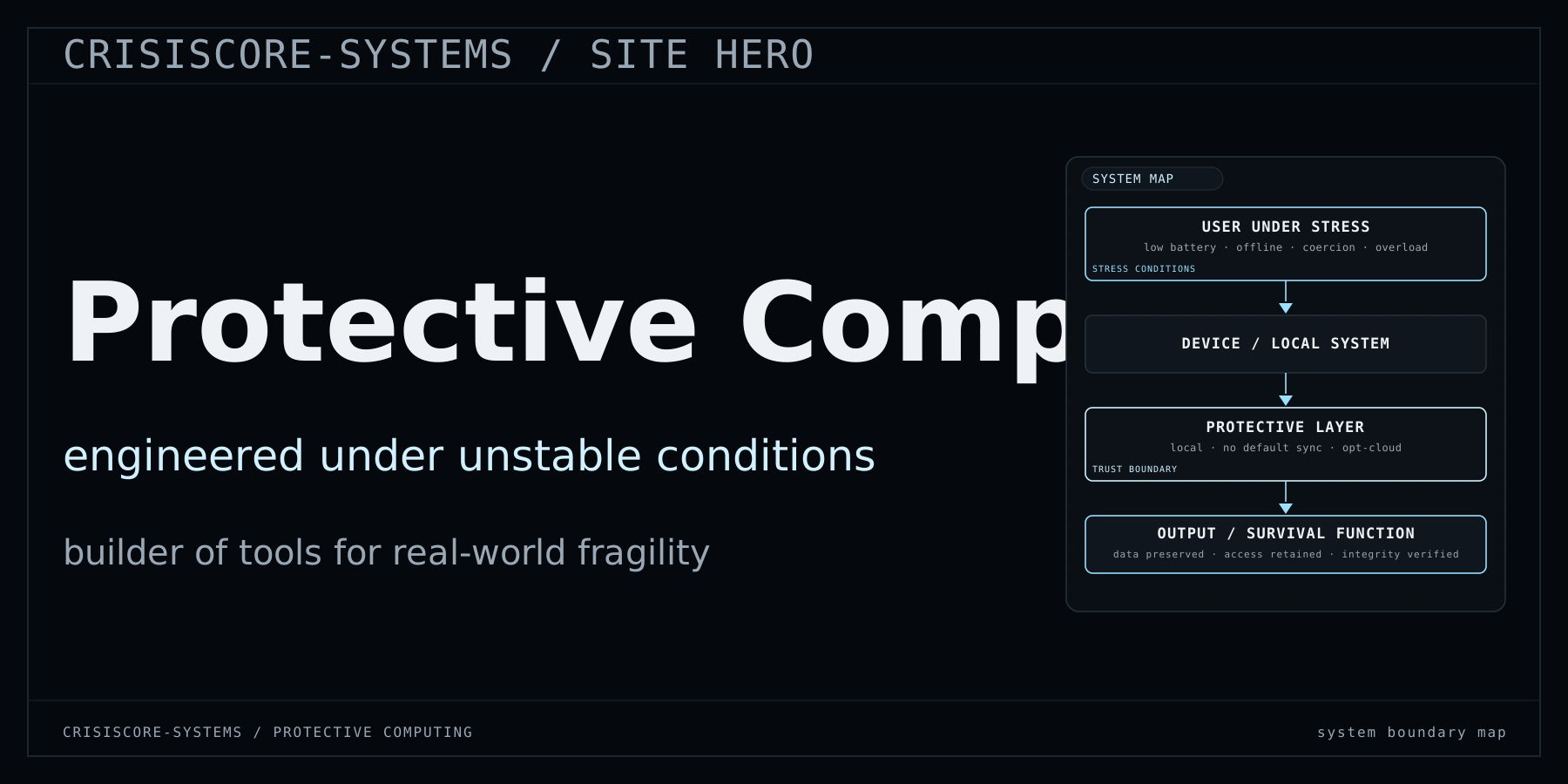
Engineered under unstable conditions
Default ownership stays on-device. Cloud is optional, not assumed. Pricing is discussed after fit is established.
What you actually get
Defensibility Packet Preview
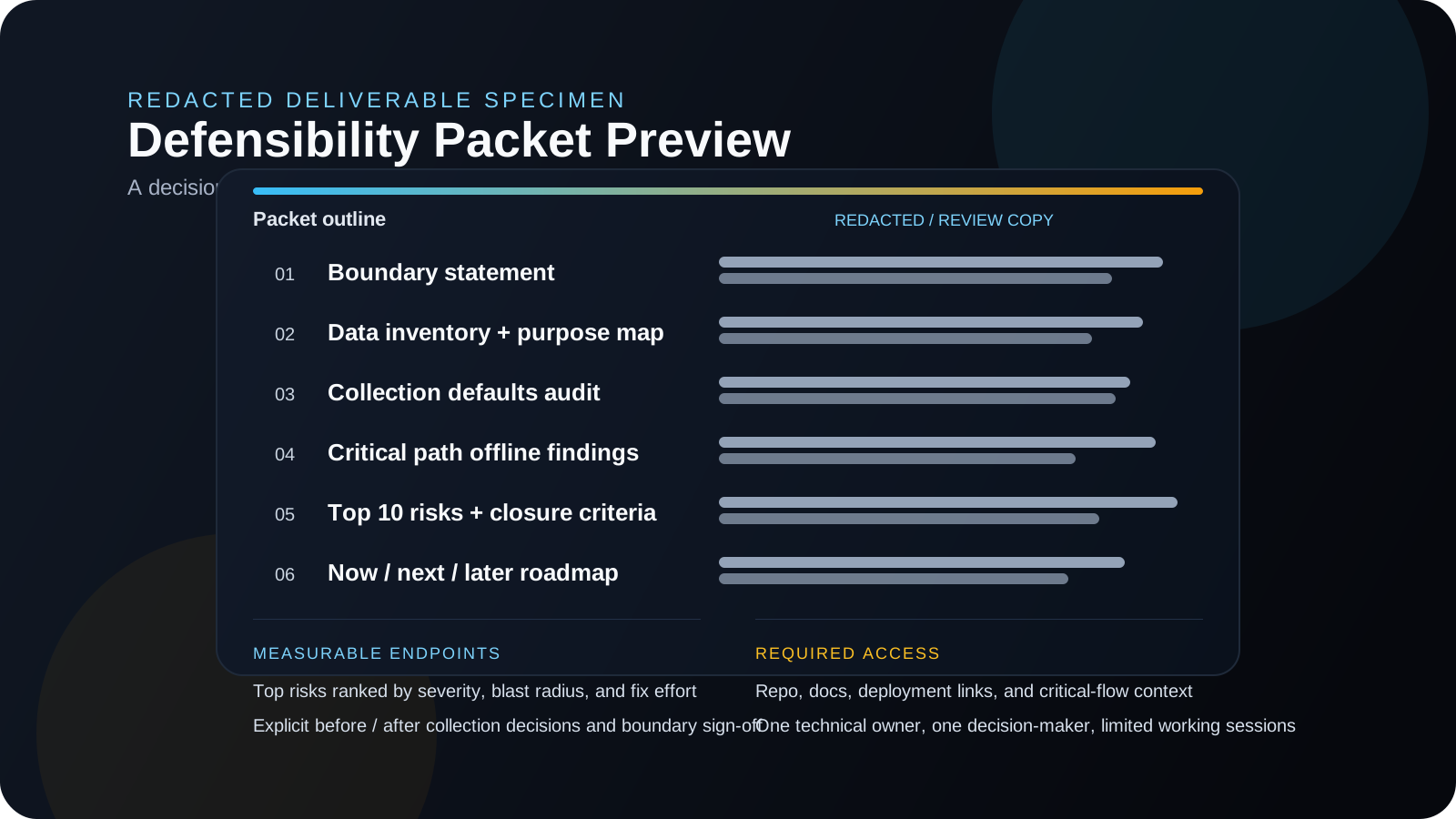
Redacted packet specimen
What this preview makes concrete
- • The packet is a real deliverable shape, not a vague consulting promise
- • The end state is measurable: ranked risks, explicit boundaries, offline findings
- • The access boundary is visible, so the two-week scope reads as bounded
Open the artifact
Inspect the preview directly.
What gets proved by the end
- • Boundary statement your team can review and accept
- • Top 10 risks ranked by severity, blast radius, and fix effort
- • Data inventory before/after decisions called out explicitly
- • Offline critical-path findings for the flows that matter most
What I need from you
- • Repo, docs, and deployment links
- • One technical owner and one decision-maker
- • A small number of working sessions, not a meeting-heavy process
- • Enough access to inspect the critical flows without blocking on procurement churn
Qualify early
Fast Fit
Great fit
- • Post-MVP product with live usage or an imminent launch
- • Sensitive, harm-prone, or coercion-sensitive data
- • One technical owner and one decision-maker available
- • Team is willing to reduce collection and enforce boundaries
Not for
- • Idea-stage MVP builds or generic staff augmentation
- • Checkbox compliance shopping without product changes
- • Generic pentest replacement expectations
- • Teams with no owner, no authority, or meeting-heavy churn
Works well with
Product-facing trust work where architecture, defaults, and degraded-mode behavior matter more than a generic audit checklist.
Web apps, PWAs, and mobile-adjacent products with critical user flows
Clinician-adjacent, HIPAA-adjacent, and trust-sensitive startup products
SOC2-bound teams that need product reality, not compliance theater
Internal operator systems with incident pressure, degraded conditions, or coercion risk
Not a generic pentest. Not a paper-only audit. The focus is product-facing trust boundaries, minimization decisions, offline resilience, and a ship-ready roadmap.
Fit first
Who hires me and when
Who hires me
Founders, technical leads, and operators responsible for products that handle sensitive, high-consequence data.
When they call
After MVP, before audit pain, before a launch with trust gaps, or after a near-miss that exposed weak boundaries.
What they need
Clear risk prioritization, fewer dangerous assumptions, and implementation guidance a product team can actually ship.
Plain-English proof
Outcome snapshots
Reduced dangerous data collection
Replace default collection with explicit boundaries, local authority, and user-initiated sharing paths.
Kept critical flows usable offline
Core actions still work under partial connectivity, degraded infrastructure, and attention collapse.
Replaced silent failure with visible recovery
Teams leave with clearer recovery states, safer fallbacks, and a decision trail they can defend.
Process without mystery
What happens in week one
1. Boundary read
I review the product surface, repo, docs, and stated constraints to find where trust currently depends on hope.
2. Risk compression
The highest-risk failure paths, abuse cases, and dangerous collection patterns get reduced into a prioritized map.
3. Actionable handoff
You get a packet your team can use immediately: boundaries, quick wins, and a roadmap aligned to product reality.
Deliverables
What you get
- • Data inventory + purpose map for sensitive categories and flows
- • Collection defaults audit showing what is reduced, refused, or made explicit
- • Retention and deletion plan with concrete boundary decisions
- • User-initiated sharing design plus a prioritized hardening roadmap
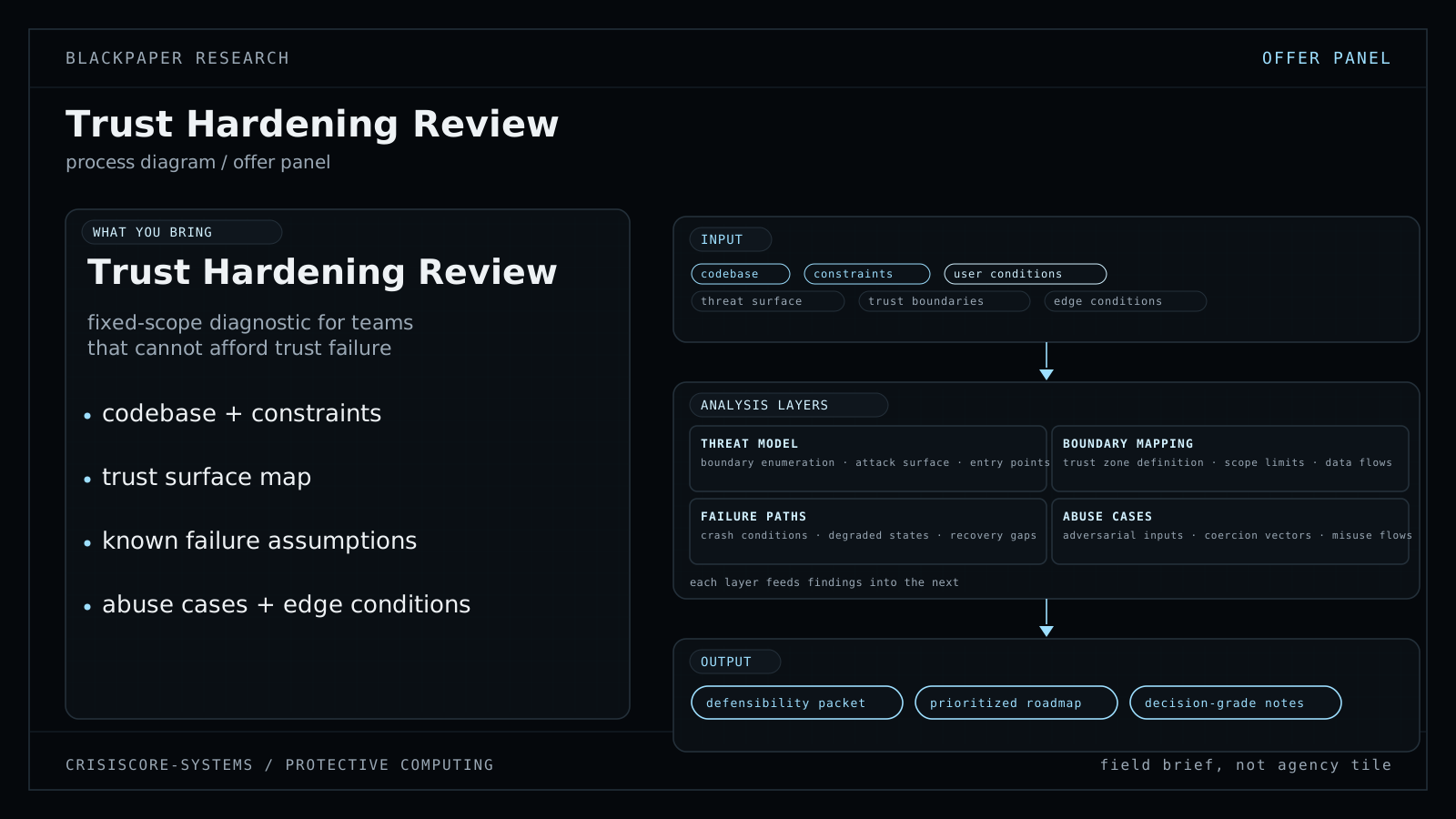
Front-door review
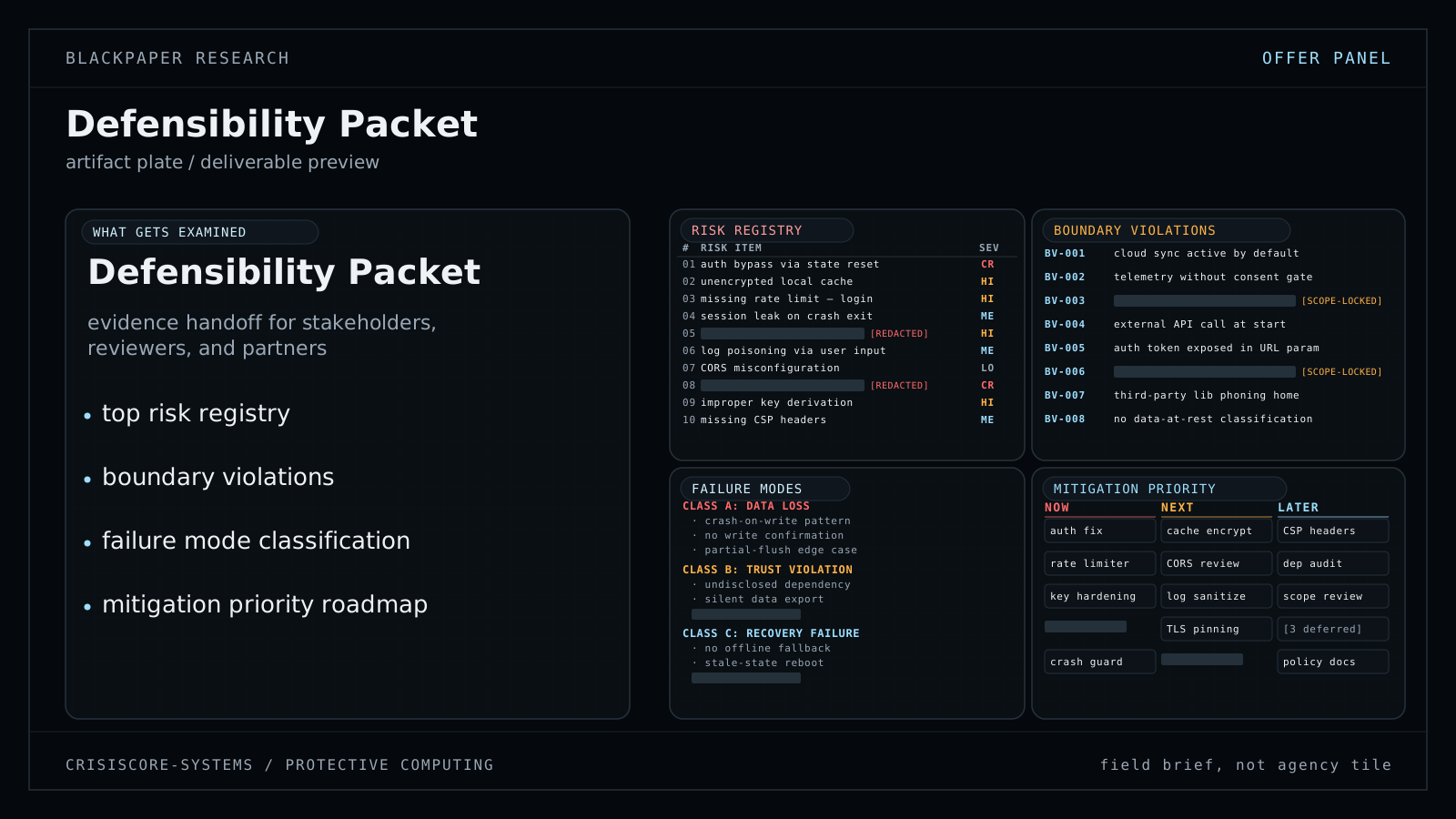
Primary deliverable
3 engagement paths
Services
1) Trust Hardening Review (front door)
For post-MVP teams needing fast clarity in a defined review window.
Output: Defensibility Packet
- • Threat model snapshot + abuse cases
- • Boundary statement + data inventory + purpose map
- • Collection defaults audit + retention/deletion plan + roadmap
Use this when you need to know where trust breaks and what to fix first.
2) Hardening Sprint (implementation)
For teams ready to ship protections.
- • Data minimization redesign
- • Local-first/offline upgrades for critical flows
- • Telemetry discipline + guardrails + handoff docs
From risk map to shipped protections, fast.
3) Fractional Trust Architect (retainer)
For teams scaling features under scrutiny.
- • Release gating + architecture reviews
- • Threat model updates per major changes
- • Continuous minimization + boundary enforcement + incident readiness
A long-term trust backbone in product decisions.
Case-style proof
Flagship walkthrough
PainTracker.ca
Minimization-first redesign
Reduce collection by default, keep core use on-device, and make sharing explicit.
Before
Pain documentation tools often collect intimate symptom history into centralized accounts, assume always-on sync, and persist records beyond the user's immediate control.
After
Core logging stays local by default, no sign-up is required for primary use, and sharing happens through explicit user-initiated export paths.
Minimization delta
- • Removed default collection paths that push sensitive entries into centralized account systems
- • Moved symptom logging and day-to-day ownership to on-device storage by default
- • Replaced background sharing assumptions with explicit export the user initiates when needed
Why it matters
The product stays usable under degraded conditions without expanding collection surface area just to preserve convenience.
Proof you can inspect
Boundary statement
Core use refuses account-first collection and avoids background sharing as the default operating model.
Data inventory
Sensitive categories and their purpose are mapped so collection is justified, bounded, and inspectable.
Retention and deletion
Retention follows user-controlled local ownership by default, with deletion posture kept legible instead of implied.
Export and sharing
Sharing paths are explicit and user-initiated, replacing silent sync assumptions with deliberate export behavior.
Check the source surface
- • Live deployment
- • Public repository
- • Boundary statement, architecture, and UI artifacts
- • Dossier with problem → constraints → minimization decisions → proof → outputs
Beyond one flagship
More Proof Snapshots
ProofVault
Bounded trust evidence for a release path
ProofVault narrows the public claim to what a pinned specimen, verifier path, drift enforcement, and hosted-green release provenance can prove.
Output: smaller claim surface, reproducible specimen, release-bound provenance.
Security and audits
Audit output shaped for operators, not theater
This work turns threat boundaries, reproduction paths, and remediation evidence into a bounded risk register and verification plan.
Output: top findings, explicit assumptions, verification steps, operator-ready next actions.
Make the claims undeniable
Proof
- • Before/after data-flow diagrams
- • Redacted trust artifacts: threat model, boundary map, decision log
- • Outcome tiles: less data, better offline coverage, lower support load and risk
- • Build receipts: redacted PRs, release gates, checklists
- • Method-specific testimonials
Gives collaborators a testable vocabulary for protective design reviews and audits.
Close
If your product handles high-stakes data, start with the review that shows where trust breaks.
Best fit: 4–12 week engagements for high-risk tools, clinician-adjacent products, and critical workflows. First step: send repo, context, constraints, and your decision timeline.